Andrej Karpathy: There Are Two Kinds of Programmers -- Those Who Code with AI, and Those Who Get Left Behind
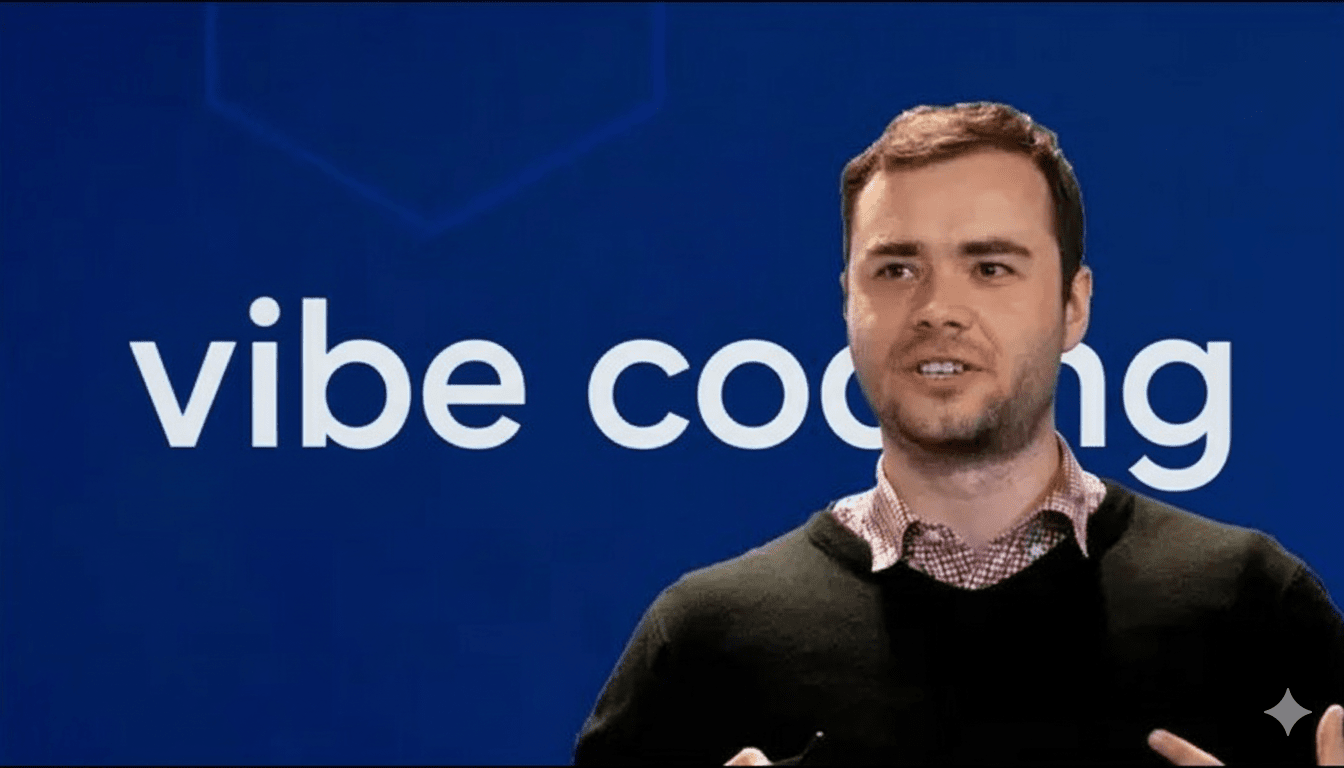
Andrej Karpathy knows what he's talking about. Former Director of AI at Tesla, early OpenAI researcher, creator of Stanford's legendary computer vision course -- he's been writing code and shipping production AI systems for over a decade. When he says his development workflow just underwent the biggest transformation in 20 years, it's worth paying attention.
His core argument: tools like Deep Code aren't just fancy autocomplete. They're a leverage multiplier. In the same time you used to spend, you can ship ten times what you used to. More importantly, you can take on projects that used to feel completely out of reach. The AI still screws up -- it over-engineers, makes bad assumptions, and won't push back when it should -- but the net gain is undeniable. The sooner you adapt, the bigger your edge.
Over the past few weeks I've been writing a lot of code with Claude Code. Here's what I've learned.
Coding Workflow
The latest wave of LLM coding improvements flipped my workflow on its head. Back in November I was roughly 80% typing by hand with IDE autocomplete, 20% agent. By December it was the reverse: 80% agent-written code, 20% me cleaning things up.
I'm mostly just talking code into existence now. I'll describe what I want in plain English and watch it materialize. It stings the programmer ego a little, honestly. But the ability to operate across an entire codebase at once -- refactoring, scaffolding, wiring things together -- is too good to pass up. Especially once you learn the rhythm: tuning the config, getting a feel for what it nails and where it faceplants.
This is the single biggest shift in my development workflow in roughly 20 years of writing code. And it happened over the course of a few weeks. I'd guess a significant chunk of engineers (double-digit percentages) are already going through the same thing. The general public? Maybe low single digits have any idea this is happening.
IDEs / Agent Swarms / The Inevitability of Errors
Two narratives are making the rounds: "IDEs are dead" and "swarms of autonomous agents will handle everything." I think both are overblown right now.
Models still make mistakes. If you actually care about the project, keep an eye on things. I keep a full IDE open in a side window and watch it like a hawk.
The errors are different now, though. Not syntax mistakes. These are sneakier -- conceptual errors, the kind a rushed junior dev would make. The model silently fills in assumptions for you, gets them wrong, never double-checks, and just builds on that faulty premise all the way down.
It also doesn't manage its own uncertainty well. It won't stop and ask "hey, do you want A or B here?" It won't flag inconsistencies. It rarely pushes back. It's a little too eager to please. Having it write a plan first, then execute against that plan, helps a lot. I honestly think there's a real need for a lightweight, inline planning mode.
It also loves to over-engineer. Layers of abstraction everywhere. Code that feels bloated. And it almost never cleans up the dead code it creates.
I've watched it spit out a sprawling thousand-line implementation -- slow, brittle, full of unnecessary detours. Then I'll ask, "Can we just do this a simpler way?" and it immediately goes "Oh, of course!" and condenses the whole thing down to a hundred lines.
Sometimes it deletes or rewrites comments and code that had nothing to do with the task, just because it didn't understand them or didn't like them. I've literally added notes in my CLAUDE.md telling it not to do this, and it still happens. But despite all of that, the net improvement is massive. I genuinely can't imagine going back.
Everyone finds their own flow. Mine: a couple Claude Code sessions in Ghostty on the left, IDE on the right for reading code and making surgical edits.
Tenacity
Watching an agent grind on a problem is honestly fascinating. It doesn't get tired. It doesn't get discouraged. A human would've said "screw it, I'll try again tomorrow" an hour ago. It just... keeps going.
Sometimes you watch it struggle for what feels like forever. Then 30 minutes in, it finally cracks it. In that moment you get this real sense of "wow, this has an AGI vibe."
You realize: mental and physical stamina is a core bottleneck in getting work done. LLMs just blew the ceiling off that.
Speedups
It's hard to put a number on how much faster LLMs make you. I'm definitely faster at the stuff I already did. But the bigger change is that I now do things I wouldn't have attempted at all.
Two reasons:
- Tons of small tasks that used to feel "not worth the effort" are now trivially easy.
- Codebases I would've avoided -- because I lacked the knowledge or skills -- suddenly feel approachable.
So yeah, it's acceleration. But more than that, it's expansion. The range of things I'm capable of has grown.
Leverage
Here's one of the most powerful things about LLMs: they're really good at iterating in a loop until they hit a goal you've defined. A lot of those "AGI-flavored" moments come from exactly this.
The key: don't micromanage. Tell it what success looks like and let it figure out the path.
You can have it write tests first, then make it pass its own tests. Hook it up to a browser via MCP and have it loop. Write a simple, obviously-correct algorithm and tell it "now optimize for performance while preserving the exact same results."
The mental shift is from imperative to declarative. Instead of "do A, then B, then C," you say "here's what the outcome should look like." The agent iterates on its own for a few rounds, and you get an extra layer of leverage for free.
Fun
I didn't expect this, but coding has actually gotten more fun. All the tedious fill-in-the-blank grunt work gets absorbed by the agent. What's left are the creative parts.
I also get stuck way less. Getting stuck sucks. Now there's almost always a path to "collaborate with it and at least make some progress," which makes it easier to just get started.
That said, I've met people who feel the opposite -- LLM coding makes them less happy.
Long term, I think this splits engineers into two camps: people who love the act of writing code, and people who love getting things built.
Atrophy
I can already feel it: my ability to write code from scratch is slowly fading. In the brain, "generation" (writing code) and "discrimination" (reading and reviewing code) are two distinct skills. Writing code demands memorizing a ton of granular syntax. Reading code is about understanding logic and structure. So even as your generation muscle weakens, you can still review code effectively -- spot what looks off, find the bugs.
Slopacolypse
I'm bracing myself: 2026 might be the year of the great content slop explosion.
GitHub, Substack, arXiv, YouTube, Reddit -- every digital content platform is going to get flooded with AI-generated material. We'll see a wave of AI-powered productivity theater, flashy demos that look amazing but don't hold up. Scattered in there will be real, tangible productivity gains too. But you'll have to dig for them.
Questions
What does the 10x engineer look like going forward? Will the gap between average and top engineers get even wider? My guess: much wider.
Will generalists start outperforming specialists? LLMs are exceptionally good at filling in details (the micro) but weaker at big-picture thinking and long-term strategy (the macro). That tilt favors people who can see the whole board.
What will coding with LLMs feel like in five years? StarCraft? Factorio? Performing a piece of music?
How much of society is actually bottlenecked by digital knowledge work?
Conclusion: Where Does This Leave Us?
LLM agent capabilities -- Claude Code in particular -- crossed a threshold of overall coherence around December 2025. That triggered a phase transition in software engineering. The way things get done shifted by an order of magnitude, practically overnight.
Right now it feels like intelligence has raced ahead of everything around it. Tool integration hasn't caught up. Teams need new workflows and collaboration patterns. The industry is still digesting what just happened.
2026 is going to be intense. Everyone's scrambling to absorb and internalize this new capability. The window is open right now. The people who figure this out early are going to have a massive head start.